Event Details
Dates: Monday 18 – Tuesday 19, September, 2023
Format: In Person
Contact: [email protected]
Conference Overview
The Osher Center for Integrative Health hosted its inaugural Tai Chi conference in September 2023, entitled Tai Chi & Qigong as Whole Person Health – Advancing the Integration of Mind-Body Practices in Contemporary Healthcare. The conference attracted a diverse group of international scholars, practitioners, and healthcare administrators and policymakers, who addressed the current evidence base of Tai Chi, Qigong, and related mind-body practices, and explored topics integral to its growing and emerging role in whole person health, nationally and internationally. The dialogue of this conference was relevant across multiple mind-body disciplines and movement-based practices.
Video Recordings
Below are selected conference recordings. Individual presentations from each of the five plenary sessions are available. You may also wish to view the conference website: https://www.osherscienceoftcq.org
Day 1
Opening Remarks:
Whole Person Health and the Promise of Tai Chi and Qigong
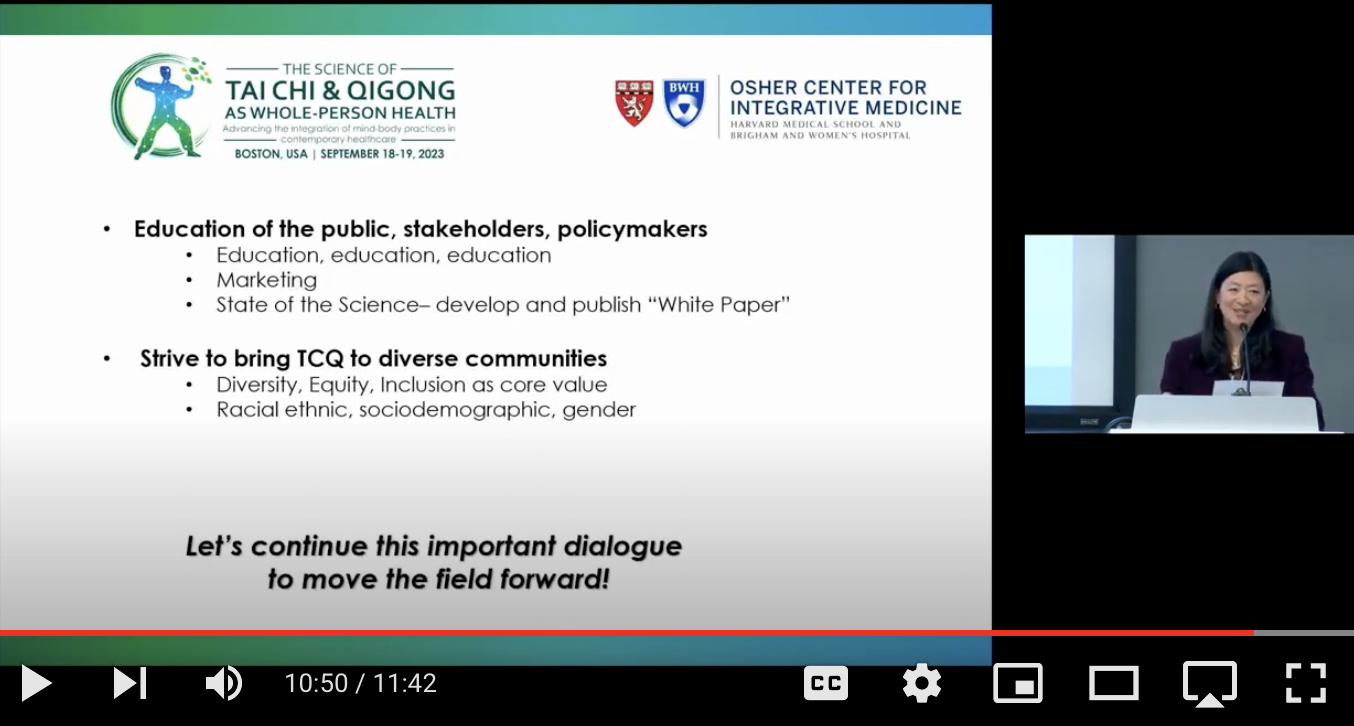
Opening Remarks
Gloria Yeh, MD, MPH, Director of Clinical Research, Osher Center for Integrative Medicine, Associate Professor of Medicine, Beth Israel Deaconess Medical Center / Harvard Medical School
Remarks: Peter Wayne, PhD, Executive Director: Osher Center for Integrative Medicine, Associate Professor, Brigham and Women’s Hospital / Harvard Medical School
____________________________________________________________________________
Keynote and Plenary Session 1:
Whole Person Health: Integration Across Physiological Systems
This session will start off the conference and introduce the interconnected concept of whole-person health. It will highlight the essential need to understand the role of physiological cross-talk in health maintenance and rehabilitation, and thus the unique therapeutic potential for multi-modal interventions like Tai Chi and qigong. Presentations will feature key psycho-physiological interactions including connective tissue/immune/nervous system; cognitive-motor dynamics in aging; socioemotional stress/inflammation/heart-brain connections.
Moderator: Peter Wayne, PhD, Executive Director: Osher Center for Integrative Medicine, Associate Professor, Brigham and Women’s Hospital / Harvard Medical School
DAY 1 KEYNOTE: “Physiological Connections through the Fascia and Interstitium Network” – Helene Langevin, MD, Director, National Center for Complementary and Integrative Health (NCCIH), National Institutes of Health (NIH)
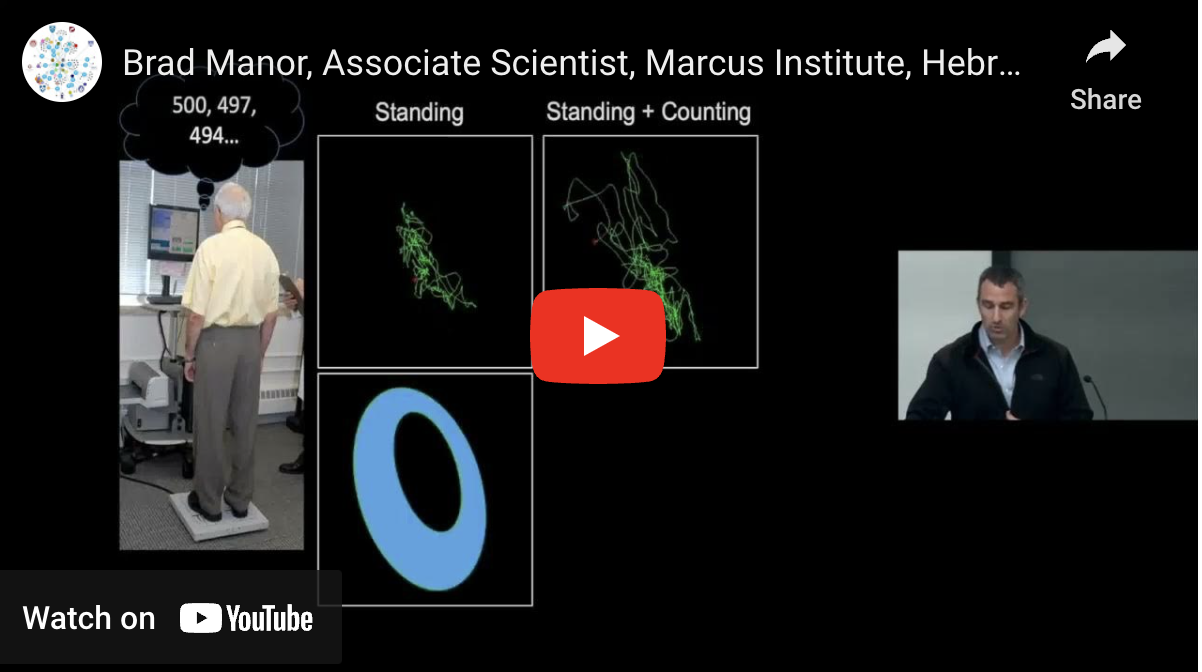
The Mind-Body Control of Balance and Gait in Older Adults – Brad Manor, MD, Associate Scientist, Marcus Institute, Hebrew SeniorLife
Neuro-Immune-Cardiovascular Cross-Talk Mediating Heart-Brain Interactions – Ahmed Tawakol, MD, Co-Director Cardiovascular Imaging Research Center, Mass General Hospital /Harvard Medical School
____________________________________________________________________________
Plenary Session 2:
State of the Science in Tai Chi & Qigong Research Part 1
This session will summarize the state of the evidence for Tai Chi and qigong in health and its connection to whole-person health. This will include the most current overview of the scientific literature, new studies in the pipeline, gaps in evidence, and opportunities to advance the field. Presentations will highlight Tai Chi/qigong for fall prevention, Tai Chi/qigong and cognitive health, neurophysiological mechanisms of Tai Chi/qigong, and Tai Chi/qigong and mental health.
Moderator: Albert Yeung, Massachusetts General Hospital/ Harvard Medical School
Impact of Tai Ji Quan Training to Prevent Falls Among Community-Dwelling Older Adults – Fuzhong Li, PhD, Senior Research Scientist, Oregon Research Institute
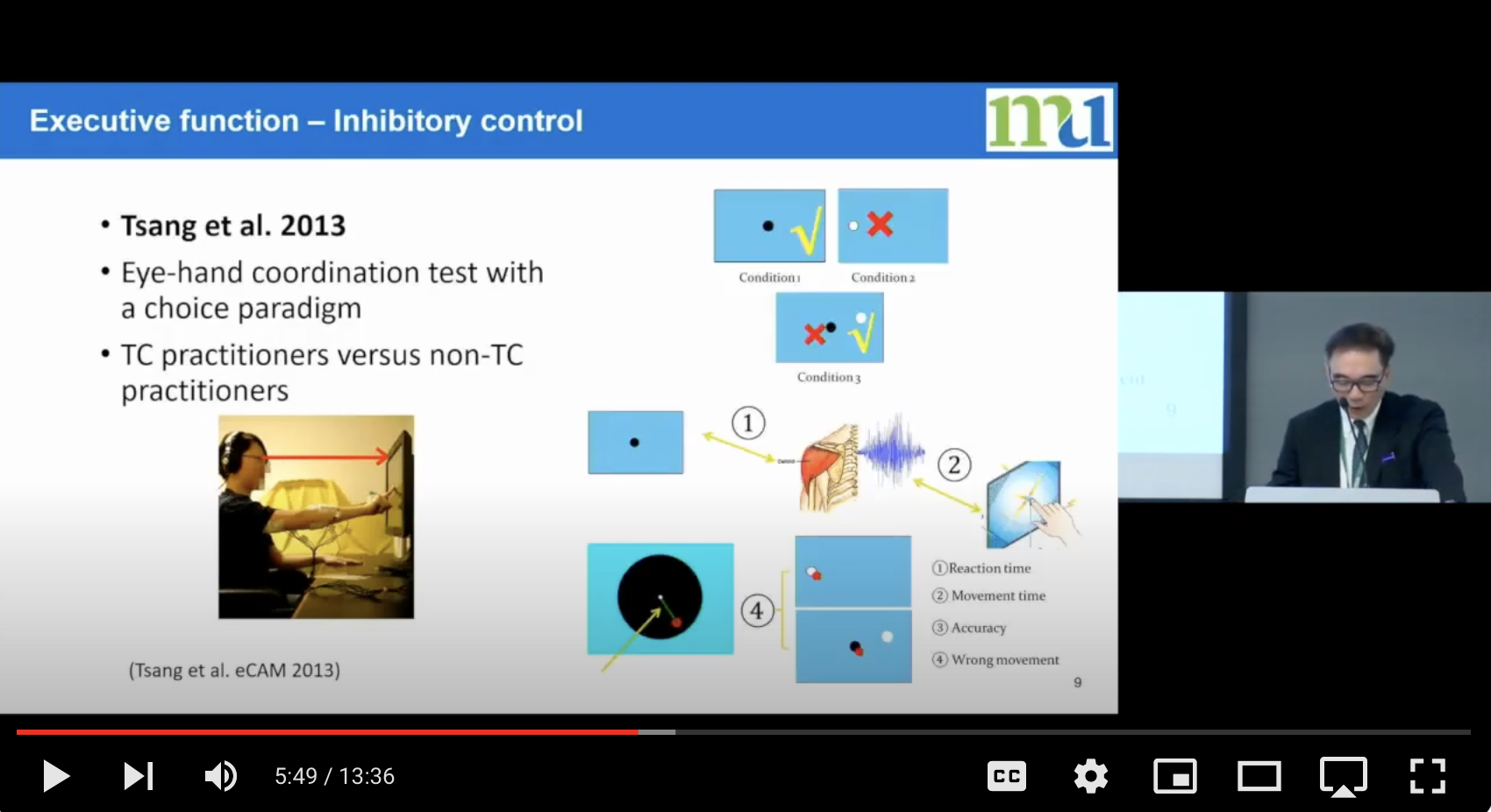
Exploring the Cognitive Impact of Tai Chi and Qigong: Current Understanding and Future Research – William Tsang, Department of Physiotherapy, Hong Kong Metropolitan University
Brain Mechanisms Underlying Tai Chi in Pin Management – Jian Kong, Professor, Massachusetts General Hospital
Neurobiological Mechanisms of Response to Tai Chi in Geriatric Depression – Helen Lavretsky, Professor In-Residence in the Department of Psychiatry, UCLA
____________________________________________________________________________
Plenary Session 3:
Implementation of Mind-Body Practices in Contemporary Healthcare
This session will introduce broad issues regarding the professionalization and implementation of Tai Chi and qigong, and their relevance to integration with contemporary healthcare. As an example, the session will feature an overview of the successes and challenges encountered in the implementation of Tai Chi in the Veterans Affairs medical system.
Moderator: Darshan Mehta, MD, MPH, Medical Director & Education Director, Osher Center for Integrative Health
The Professionalization of (Allied) Health Traditions/Healthcare-Related Fields: The Rationale, and the Pros and Cons – Daniel Seitz, Consultant, Daniel Seitz Consulting
An Overview of Tai Chi and Qigong and Complementary and Integrative Health Services in the Veterans Health Administration – A Whole Health System Transformation – Janet Clark, Senior Physician Lead for Integrative Health and Education, Veterans Health Administration, Office of Patient Centered Care and Cultural Transformation Veterans Health Administration
____________________________________________________________________________
Day 2
Plenary Session 4:
Explorations in Body Intelligence: Examples from Western and East Asian Medicine
This session will explore unique boundaries between traditional concepts, such as Qi, and leading-edge modern principles of biophysics and developmental biology. Specific topics will include electromorphogenesis, meridians and acupoints, and the scientific exploration of traditional East Asian medicine concepts such as Qi.
Moderator: Helene Langevin, MD, Director, National Center for Complementary and Integrative Health (NCCIH), National Institutes of Health (NIH)
Molecular Mechanisms of the Wisdom of the Body: From Basal Cognition to Next-Generation Regenerative Medicine – Michael Levin, PhD, Distinguished Professor and Vannevar Bush Chair, Tufts University
From Fluorescent Dyes to Electrokinetics: Bioelectrical Mechanisms in Eastern Medicine – Andrew Ahn, MD, Chief Medical Offier & Osher Affiliate Faculty, Labfront + Osher Research Center
“To Qi or Not to Qi”: Personal Observations on the Integration of Traditional Concepts of Qi into Research, Practice, and Teaching of Tai Chi and Qigong – Peter Wayne, PhD, Executive Director, Osher Center for Integrative Medicine, Associate Professor, Brigham and Women’s Hospital / Harvard Medical School
____________________________________________________________________________
Plenary Session 5:
State of the Science in Tai Chi & Qigong Research Part 2
This session will summarize the state of the evidence for Tai Chi and Qigong in health and its connection to whole-person health. This will include the most current overview of the scientific literature, new studies in the pipeline, gaps in evidence, and opportunities to advance the field. Presentations will highlight: Tai Chi/qigong and immune function, Tai Chi/Qigong in cancer, Tai Chi/Qigong for musculoskeletal pain, and Tai Chi/Qigong in cardio-pulmonary conditions.
Moderator: Wolf Mehling, Integrative Physician, Research Faculty, Professor, University of California San Francisco
Tai Chi Augments Viral Specific Immunity and Reverse Cellular and Genomic Inflammation in Older Adults – Michael Irwin, Norman Cousins Distinguished Professor of Psychiatry and Biobehavioral Sciences, University of California, Los Angeles
Tai Chi and Qigong in Cancer Care: Current Evidence and Future Directions – Byeongsang Oh, Associate Professor , Faculty of Medicine and Health, University of Sydney, Australia
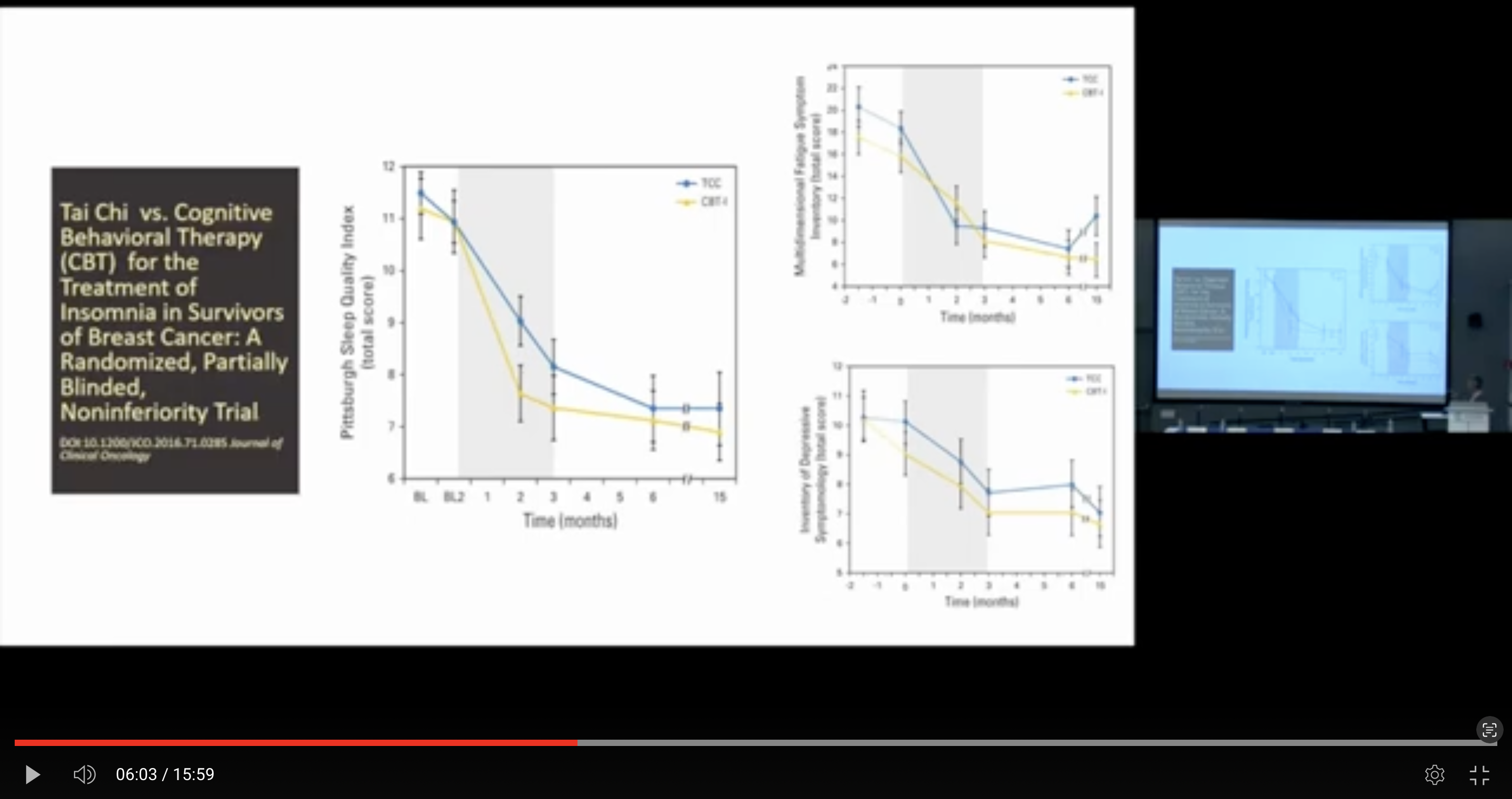
Tai Chi and Pain Management – Chenchen Wang, Professor of Medicine, Tufts Medicine
Chronic Cardiovascular and Pulmonary Disease and Tai Chi: Healing the Whole Person – Gloria Yeh, MD, MPH, Director of Clinical Research, Osher Center for Integrative Medicine, Associate Professor of Medicine, Beth Israel Deaconess Medical Center / Harvard Medical School
____________________________________________________________________________
Closing Remarks
Gloria Yeh, MD, MPH, Director of Clinical Research, Osher Center for Integrative Medicine, Associate Professor of Medicine, Beth Israel Deaconess Medical Center / Harvard Medical School